
UK AUTUMN BUDGET 2026 – NEWSLETTER SERIES

ASESA SOLUTIONS | UK AUTUMN BUDGET 2026
Newsletter Series · Part 4
VAT E-Invoicing:
Is Your Business Ready for April 2029?
A major step towards digitalising UK business transactions is on the horizon. Here is what VAT-registered businesses need to know — and how to start preparing.
The UK government is taking an important step towards digitalising business transactions. From 1 April 2029, VAT-registered businesses will be required to issue and receive VAT invoices electronically, unless a specific exemption applies.
This change will affect how businesses exchange invoices, manage accounting records and process transactions.

THE KEY DATE
1 APRIL 2029
Planned start of mandatory VAT e-invoicing for VAT-registered businesses, subject to specific exemptions.
What is changing?
Under the new requirements, VAT invoices must be exchanged in a structured, machine-readable electronic format.
NOT A STRUCTURED E-INVOICE
PDF by email
A PDF invoice sent by email will not qualify as a structured e-invoice under the new system.
THE NEW APPROACH
Structured e-invoice
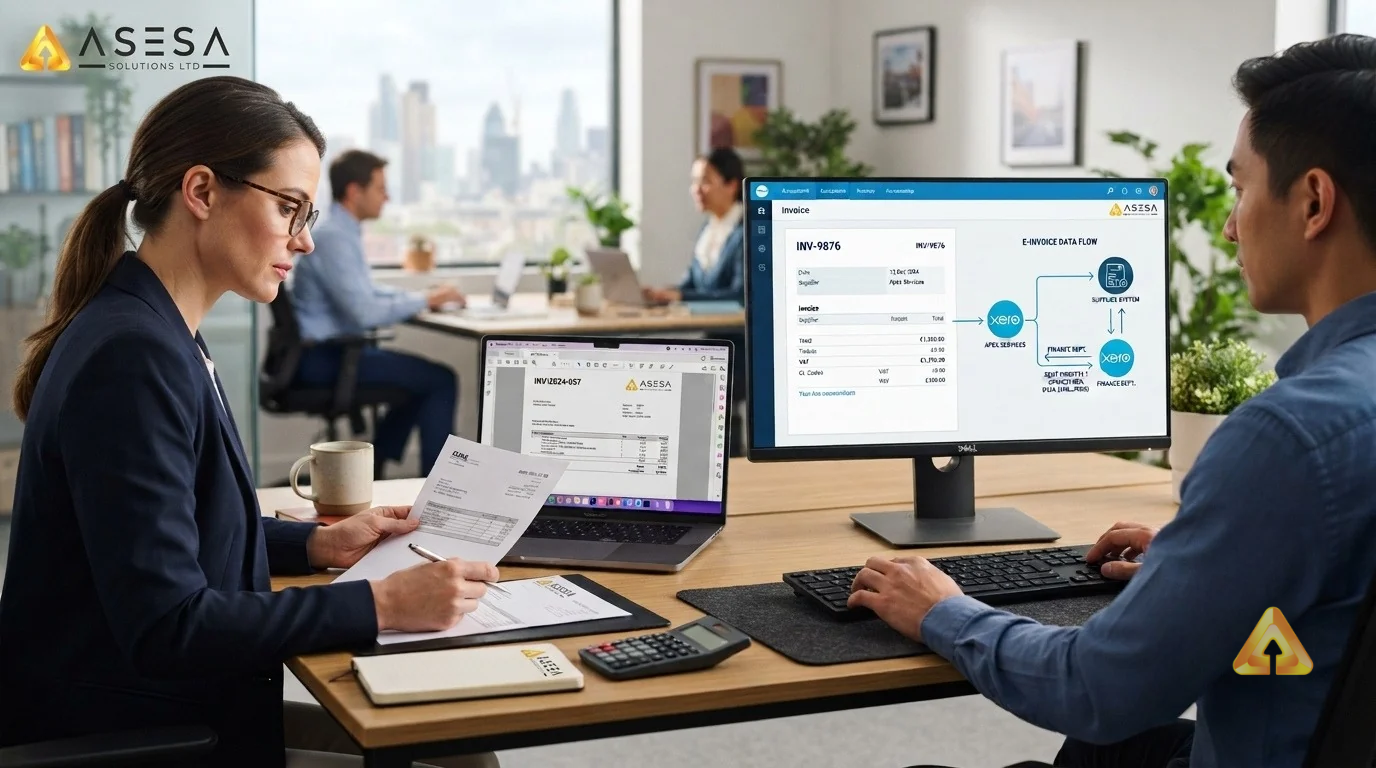
Invoice data is exchanged directly between the supplier’s and customer’s financial systems.

This approach is intended to help reduce manual processing and improve accuracy.
INTEROPERABILITY FRAMEWORK
Peppol will be the core framework for UK e-invoicing.
It will provide a common approach for businesses using different software systems to exchange invoices.
Which businesses will be affected?
The requirements will apply broadly to VAT-registered businesses, including:
Companies
Sole traders
Partnerships
Specific exemptions may apply. Businesses will need to be able to receive e-invoices and issue them whenever a VAT invoice is required under the existing rules. The circumstances in which VAT invoices must be issued will remain unchanged.
How can businesses prepare?
Although implementation is not until April 2029, businesses should start reviewing their invoicing arrangements.
YOUR PREPARATION CHECKLIST
01. Review your current sales and purchase invoicing processes.
02. Discuss future e-invoicing compatibility with your accounting software provider.
03. Identify whether your existing systems can exchange structured invoice data.
04. Review internal invoice approval and record-keeping procedures.
05. Consider staff training and potential system integration requirements.
ASESA ADVICE
Prepare early. Invest wisely.
The government plans to publish the detailed requirements, including technical standards, scope and exemptions, between October 2027 and April 2028.
Businesses should avoid rushing into purchasing new software before these requirements are confirmed. However, reviewing existing systems and discussing future compatibility with software providers now can help minimise disruption.
A measured review today can help make the transition smoother tomorrow.
How ASESA Solutions can help
At ASESA Solutions, we encourage businesses to review their invoicing processes early and prepare for the transition to digital invoicing well ahead of the 2029 deadline.
PLAN AHEAD WITH CONFIDENCE
Is your invoicing process ready for the change?
Speak to ASESA Solutions about reviewing your accounting and invoicing processes ahead of the 2029 transition.