







Making Tax Digital for Income Tax


Making Tax Digital is changing how eligible sole traders and landlords keep records and report income to HMRC. Understanding the requirements early can help you prepare with greater confidence.
Why prepare early?
Reviewing your bookkeeping, digital records and reporting process in advance can help you understand the changes and identify what needs to be done before your applicable start date.
What Is Making Tax Digital for Income Tax?
Making Tax Digital for Income Tax, often called MTD for Income Tax, is HMRC’s system for digital record-keeping and tax reporting for eligible individuals with income from self-employment and property.
Rather than managing all relevant records at year-end, affected taxpayers generally use compatible software to maintain digital records, submit quarterly updates and complete their year-end tax reporting.
MTD for Income Tax is different from Making Tax Digital for VAT. Check which requirements apply to your own business and tax position.
Making Tax Digital 2026, 2027 and 2028: Income Thresholds
The introduction of MTD for Income Tax is phased according to qualifying income from self-employment and property. The relevant figures are based on the previous tax year’s return.
From 6 April 2026
Based on qualifying income in the 2024–25 tax year.
From 6 April 2027
Based on qualifying income in the 2025–26 tax year.
From 6 April 2028
Based on qualifying income in the 2026–27 tax year.
Important: qualifying income is not profit.
Qualifying income means the relevant gross income before expenses, rather than business profit. Where you have more than one qualifying income source, check HMRC’s rules for how these are considered together. Eligibility, exemptions and individual circumstances can affect your obligations.
HMRC Digital Tax Reporting: What Will You Need to Do?
If you are within scope, preparing your bookkeeping process is an important first step. The main areas to consider include:
Keep accurate bookkeeping records
Organise relevant business and property income and expenses using compatible software and an appropriate digital record-keeping process.
Prepare for quarterly HMRC submissions
Submit summaries of relevant income and expenses through compatible software at the required intervals.
Review your numbers throughout the year
Regular reviews can help you identify missing transactions, unusual expenses and discrepancies earlier.
Complete the required tax reporting
Review adjustments, other relevant income and allowances, and complete the required year-end submission and payment obligations.
How to Prepare for Making Tax Digital: Four Practical Steps
Preparing ahead of your applicable start date can make the transition more manageable. Consider these four practical steps.
01. Check Your MTD Start Date
Review the relevant tax return and qualifying income to understand whether and when the requirements apply.
02. Review Your Bookkeeping Process
Check how invoices, receipts, expenses and bank transactions are recorded, stored and reconciled.
03. Check Your MTD-Compatible Software
Confirm that your chosen software supports the relevant HMRC requirements and that your records can be maintained correctly.
04. Plan Your Tax Compliance Responsibilities
Decide who will maintain the records, prepare quarterly updates and manage year-end reporting. If you use a tax agent, discuss the process in advance.
Why Professional Bookkeeping Matters for Small Businesses
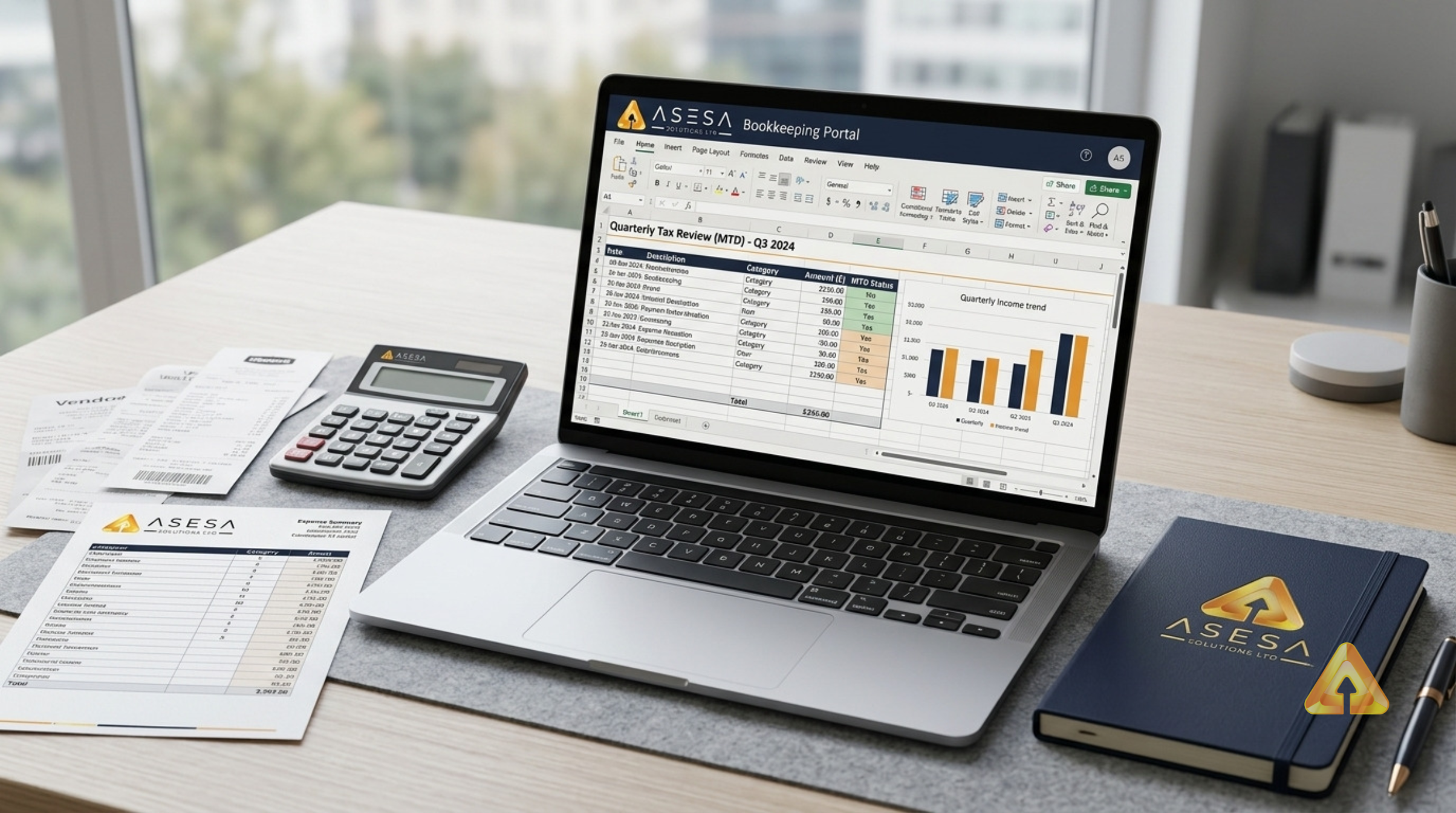
Good bookkeeping is about more than tax compliance. Reliable financial records can help small businesses understand cash flow, monitor costs, plan for tax payments and make informed financial decisions.
For sole traders and landlords preparing for Making Tax Digital, a consistent record-keeping process can make reporting more manageable and improve visibility over the financial year.
A practical takeaway
Start by understanding your qualifying income, checking the relevant HMRC guidance and reviewing whether your existing bookkeeping process is ready for digital reporting.
Financial and Compliance Support from ASESA Solutions Ltd
ASESA Solutions Ltd supports businesses with bookkeeping, payroll, VAT and tax-related compliance. Our services are designed to help businesses manage essential financial administration and maintain more organised records.
Our services also include HMRC agent services, GP payroll, NHS Pension support and Companies House Identity Verification.
If you are a sole trader, landlord or growing business, reviewing your bookkeeping and tax processes is a practical first step towards understanding what the changing reporting requirements may mean for you.
Official HMRC Guidance
For the latest eligibility requirements, registration steps and reporting guidance, consult HMRC directly.
Making Tax Digital for Income Tax — eligibility and guidance
This article is for general information only and does not constitute individual tax or accounting advice. Requirements may vary according to your circumstances. Check the latest HMRC guidance or seek professional advice.